TRANSPLANT AFTERCARE AND CARE AFTER KASAI
Transplant aftercare (and care after Kasai)
Part 1. Care after the Kasai procedure
Even after a successful operation, the liver is not fully back to normal. Children need special care for a long time.
• Bile flow medicine. A medicine called ursodeoxycholic acid is often given to improve bile flow.
• Vitamins A, D, E and K. Without enough bile, the body cannot absorb these vitamins well.
Supplements may be needed for years.
• Antibiotics. Many teams give antibiotics in the first months to reduce the risk of infection in the bile ducts.
• Nutrition. Babies often need extra calories to grow, such as breast milk, high energy formula,
or special fats called MCT that are easier to digest. Breastfeeding usually continues.
• Regular check ups. Blood tests, ultrasound scans and weight checks, often frequent at first
and then less often.
• Vaccines. Routine vaccines are important. Ask the team about hepatitis A, hepatitis B and
yearly flu vaccine.
Always give medicines exactly as the doctor says. Doses depend on your child’s weight and condition.
See a doctor the same day if your child after Kasai has:
• A fever (a temperature of 38 degrees Celsius or higher) with no clear cause. This can be cholangitis, an infection of the bile ducts.
• Pale stools, dark urine or jaundice returning.
• A swollen or painful tummy.
• Vomiting blood or black stools. This is an emergency.
• Worsening itching, poor feeding or poor growth.
Part 2. After a liver transplant
A transplant gives your child a healthy working liver. Recovery takes time and life afterwards needs a
steady routine.
• Hospital stay. Usually a few weeks.
• Anti rejection medicines (immunosuppressants). Taken every day, at the same times, for life.
They stop the body attacking the new liver. Doses change as your child grows.
• Blood tests. Visits are often weekly at first. On blood test days, ask the team whether to give the morning dose before or after the test.
• Missed doses. Missing even one dose can raise the risk of rejection. If a dose is missed or
vomited, call the transplant team for advice.
Rejection
Rejection means the body is starting to attack the new liver. It does not mean the transplant has
failed. Caught early, it is usually treated with medicine changes. Most episodes happen in the first
year, but it can occur later.
Call the team early if your child has jaundice, dark urine, pale stools, fever, tiredness, loss of appetite or a swollen tummy.
Infections
Anti rejection medicines weaken the immune system, so infections can be more serious. Wash hands
often, keep cuts clean and avoid close contact with sick people. Any fever needs quick medical
review.
Vaccines
Children after transplant should not receive live vaccines unless the transplant team says it is safe. In Kenya’s routine schedule, BCG, oral polio, rotavirus, measles rubella and yellow fever vaccines are
live vaccines. Always check with the team before any vaccine, and ask which ones your child still
needs.
School and daily life
• Many children go back to school within about six months, depending on their recovery.
• Tell teachers about the medicines, the signs of illness to watch for, and who to call.
• Medicines can increase appetite. A balanced diet helps healthy weight.
• Children can play and be active. Ask the team about contact sports.
Looking ahead
In countries with established transplant programmes, studies of children with biliary atresia report
that about 86 in 100 are alive five years after transplant, and about 79 in 100 at 30 years. Check ups
continue for life, and teens are helped to move to adult liver care.
The aftercare gap
Many families travel abroad for a transplant and come home to very little follow up support, even
though aftercare is the most critical stage of recovery. This gap is one of the reasons BALCA was
founded. The strategic plan includes aftercare services, counselling, peer support and a register of
children, so that every family has someone to turn to once they are home.
Causes and risk factors
In short
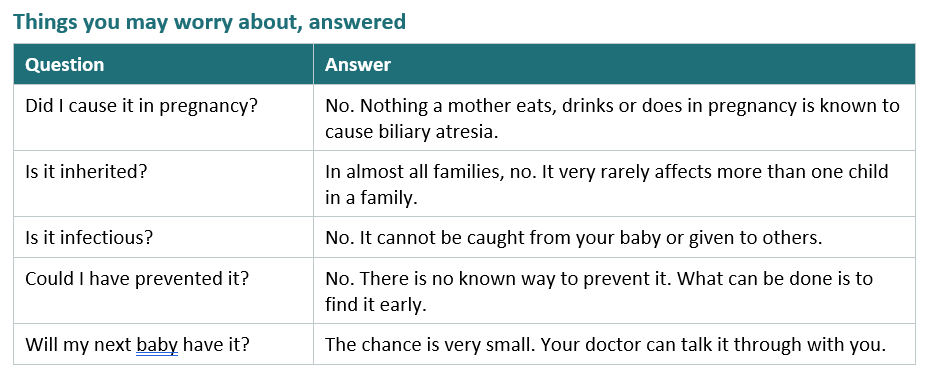
Nobody knows exactly what causes biliary atresia. It is not caused by anything parents did, and it cannot be prevented.
What doctors think
Researchers believe biliary atresia comes from a mix of factors that affect the bile ducts before birth
or in the first weeks of life. Ideas being studied include:
• A problem in how the bile ducts formed before birth.
• A virus or other trigger that sets off swelling and scarring in the ducts.
• An overactive response of the baby’s own immune system.
• Changes in genes that make some babies more likely to be affected.
None of these has been proven as the single cause, and different babies may have different causes.
Other conditions that sometimes come with it
In some babies, biliary atresia comes with other differences in the body, such as in the heart, spleen or the position of organs. Doctors call one pattern biliary atresia splenic malformation. The care team will check for these.
Risk factors
Biliary atresia is slightly more common in girls. It is seen more often in East Asia. Little is known
about how often it occurs in African children, which is why better records are needed.