
ABOUT THE LIVER
About the liver
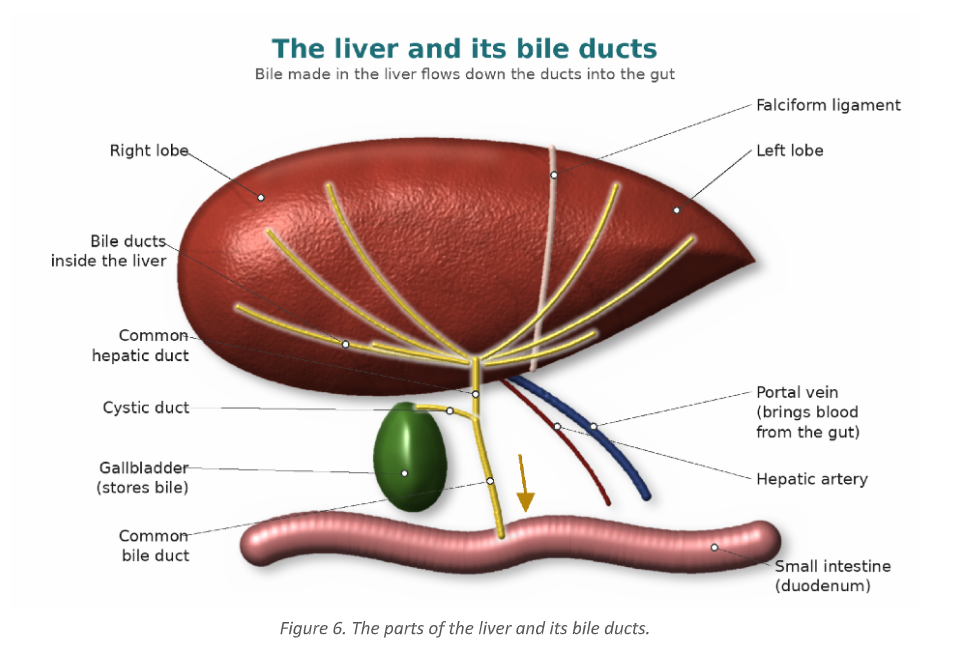
The liver is the body’s busiest organ. It sits on the right side of the tummy, under the ribs. In a baby it
is about the size of a small fist.
What the liver does
• Makes bile to digest fats and take in vitamins A, D, E and K.
• Cleans the blood, removing waste and many medicines.
• Makes proteins that help blood clot, so that a cut stops bleeding.
• Stores energy and vitamins.
• Helps fight infection.
A liver can repair itself
The liver can regrow. That is why a parent can give part of their liver to a child, and both livers grow back to a healthy size.
When the liver is damaged
• Cholestasis. Bile cannot flow, so the liver is harmed. This causes jaundice, pale stools and dark urine.
• Scarring and cirrhosis. Over time scar tissue replaces healthy liver.
• Portal hypertension. Scarring raises pressure in the blood vessels around the liver. This can
cause a swollen spleen, a swollen tummy and fragile veins that can bleed.
• Liver failure. The liver can no longer do its work, and a transplant is needed.
Other childhood liver conditions
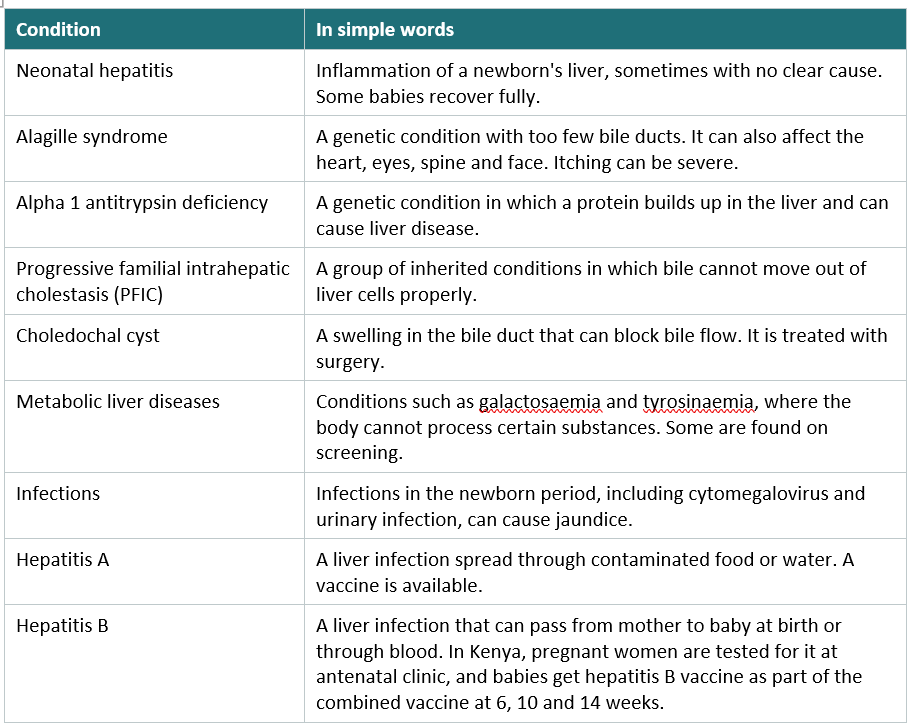
Biliary atresia is one of several liver conditions that can show up in babies and children. A baby with jaundice beyond two weeks is checked for all of them at the same time.
Living with a liver condition
Many children with liver conditions go to school, play and grow up. Daily routines make a big difference.
Medicines
• Set a fixed time every day and use an alarm.
• Use a medicine chart or pill box.
• Never stop or change a medicine without asking the team.
• Always carry a list of your child’s medicines and the clinic’s phone number.
Food and growth
• Children with liver disease often need extra calories and fat soluble vitamins. Breastfeeding
usually continues, and foods are added from 6 months as the Mother and Child Health
Handbook advises, with the team’s guidance.
• Small, frequent feeds are often easier. Ask the dietitian whether to add energy to feeds, such
as extra oil or special fats (MCT).
• Weigh and measure your child regularly, plot the weight on the growth chart in the handbook,
and share the figures with the team.
• If feeding is hard, ask for a dietitian.
Staying well
• Wash hands often and keep away from people who are sick.
• Keep vaccines up to date, and check with the team about each one.
• Take any fever seriously, and call the same day.
School and play
• Tell the teacher about your child’s condition and medicines, with a short written plan.
• Encourage play and normal activity. Ask the team about contact sports.
• Do not let the condition become the whole of your child’s identity.
Looking after the family
• Parents often feel fear, exhaustion and guilt. These feelings are common, and none of it is your fault.
• Brothers and sisters need time and attention too, and an honest explanation in simple words.
• Talk to another parent. It helps to hear from someone who has been there.
• If you feel low for more than two weeks, cannot sleep, or feel hopeless, speak to a health
worker or someone you trust.
Growing up
As children become teenagers, they take over more of their own care. Many adults who had biliary
atresia as babies lead full lives, and pregnancies have been reported in women who had biliary
atresia, which need careful planning with the liver team. Teens should be supported to understand
their condition and to move smoothly to adult care.
Get urgent help if your child:
• Has a fever.
• Vomits blood or has black stools.
• Is hard to wake, confused or unusually sleepy.
• Has jaundice that is getting worse, or a rapidly swelling tummy.
• Bleeds or bruises easily.